
Where Should a French Drain Outlet? Legal, Practical Options for Tulsa Homes
A French drain only works if the water has somewhere to go. The trench and pipe collect it, but the outlet is where the project succeeds or fails. It is also the part of the job most likely to cause a problem with the city or a neighbor if it is planned badly.
This guide walks through the outlet options Tulsa-area contractors commonly use, the city rule that frames all of them, and the questions to ask before anyone starts digging.
The rule that comes first: don't damage adjoining properties
The City of Tulsa's Residential Site Plan Guidebook (January 2025) puts it plainly: "All residential properties must accept and convey drainage without causing damage to adjoining properties. Flow coming from off-site onto the property cannot be blocked." It adds that any additional flow originating on the property "must be collected and conveyed to the street, if possible, or other approved drainage conveyance facility."
Two things follow from that for a homeowner:
- Your outlet cannot dump water where it damages a neighbor. Pointing a pipe at the property line and letting the next yard deal with it is the wrong plan.
- You cannot simply wall off water coming from uphill. If water flows onto your lot from a higher property, the fix is to carry it through your lot safely, not to block it.
The guidebook's drainage section is written for new homes, additions, pools and other projects that change drainage patterns, but it is the clearest statement of how the city thinks about yard water. Neighbor disputes are a bigger topic; see neighbor water runoff in Oklahoma for that side of it.
Outlet options at a glance
| Outlet | When it fits | Watch for |
|---|---|---|
| To the street | Lots that slope toward the front and can reach the curb | Work in the public right-of-way, like a pipe through the curb, needs a separate right-of-way permit in Tulsa |
| Daylight to a lower area of your own lot | Larger or sloped lots with a safe low spot well inside the property | Water must not run on toward the neighbor or erode the slope |
| Pop-up emitter | Short runs where the pipe can end in the lawn, downhill of the wet spot | Needs fall to the emitter; can clog with silt or grass |
| Dry well | No other outlet is reachable | Drains slowly in Tulsa's clay; a soil check is worth asking for |
| Sump basin with a pump | Flat lots or low areas with no gravity outlet | Power, maintenance, and where the pump discharges |
Option 1: carry it to the street
The city guidebook names the street as the preferred destination "if possible," and it asks that new houses direct roof drainage "to the street or other approved conveyance." On a lot that falls toward the front, a contractor may run solid pipe from the French drain to the curb area.
The catch is the right-of-way. The strip between your property line and the street, including the curb, parkway and sidewalk, is public. In Tulsa, work in the street right-of-way needs a separate right-of-way permit, and we did not find a published city standard for curb outlets. Ask your contractor how they plan to handle it, or call City of Tulsa Development Services (311). Suburbs such as Broken Arrow, Owasso and Jenks have their own rules.
Option 2: daylight inside your own lot
"Daylighting" means the pipe simply ends at a lower point where water can spread out on the surface. It is simple and easy to inspect. It only works when there is a safe low area well inside your property, such as a back corner that already takes water without harming anything, and enough drop to reach it.
Ask how far the outlet will sit from the property line, which way water will travel once it leaves the pipe, and whether rock or a splash pad will keep the end from eroding. If the honest answer is "it will run into the next yard," look for a different outlet.
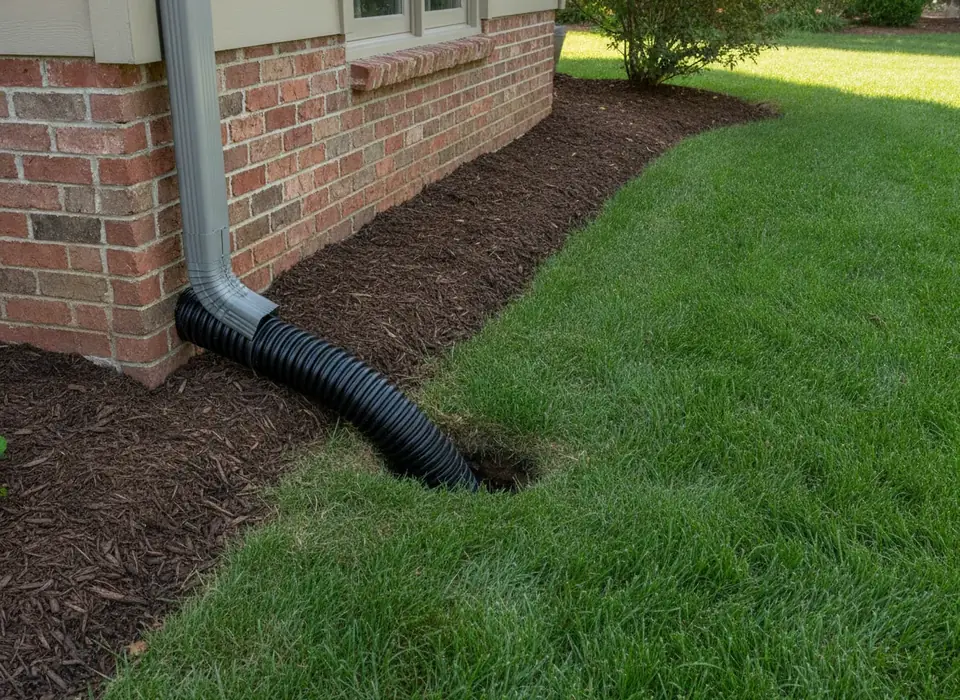
Option 3: a pop-up emitter
A pop-up emitter is a small cap at the end of a buried line. When water pushes up through the pipe, the cap lifts and lets it out onto the lawn, then drops closed. It is common on downspout lines and short French drain runs. It needs the emitter to sit lower than where the water enters, and it can clog with silt or grass clippings. Our post on dry wells vs pop-up emitters in clay covers the tradeoffs in detail.
Option 4: a dry well
A dry well is an underground chamber or gravel pit that holds water and lets it soak into the soil. It is the usual answer when nothing else is reachable. In much of Tulsa County, though, the subsoil is clay that USDA rates "somewhat poorly drained," and water moves into it slowly. A dry well in that soil can fill during a storm and take a long time to empty. Fixr lists dry wells at $1,500 to $5,000 installed (Jan 2025, published estimate, not a quote), so it is worth asking whether a soil or percolation check makes sense first.
Option 5: a sump basin and pump
On a flat lot or a low spot with no downhill path, a contractor may collect water in a basin and pump it to a better outlet. That adds a pump, power and upkeep, and the discharge still has to follow the same neighbor rule. The crawl space and sump pump page explains how discharge placement is usually handled.
Never the sanitary sewer. Do not tie a French drain, downspout or sump pump into the sanitary sewer line or a cleanout. Clean rainwater is the only thing a French drain should carry, and anything tied into your home's plumbing is a job for a licensed plumber. If a plan mentions a connection to any public sewer or storm inlet, ask the contractor to confirm it with the City of Tulsa before work starts.
Permits, easements and HOAs
Inside Tulsa city limits, the city's Watershed Development Permit rules cover excavating, grading and regrading. Ask your contractor whether your project needs a permit, or call City of Tulsa Development Services (311). The full permit picture is in do I need a permit for a French drain in Tulsa.
Check your HOA covenants and plat for drainage easements before regrading or trenching. Many newer subdivisions in Jenks, Bixby, Owasso and Broken Arrow have platted swales that carry water for several lots, and a new outlet should not interfere with them.
Creek flooding is a different problem
French drains handle yard and roof runoff. They don't protect a home from creek or river flooding, and a yard outlet near a creek is not a flood plan. If you are near a creek, request a Floodplain Determination from the City of Tulsa.
Questions to ask about the outlet
- Where exactly will the water leave, and can you mark it on a sketch?
- How much drop is there from the wet spot to the outlet?
- Will any part of the work be in the right-of-way, and who handles that permit?
- Where does the water travel after it leaves the pipe, and could it reach a neighbor?
- Is there a cleanout so the line can be flushed later?
Outlet distance is one of the biggest cost drivers, so it belongs on every quote. The Tulsa French drain cost guide shows how it fits with the rest, and the French drain installation page walks through a typical job. When you are ready, the free quote form sends your project to independent local drainage companies. Tulsa French Drain Pros is a free matching service, not a contractor, and there is no obligation.
Questions people ask
Can I run my French drain into my neighbor's yard?
No. Tulsa's Residential Site Plan Guidebook says residential properties must accept and convey drainage without causing damage to adjoining properties. Pointing an outlet at the property line can create a dispute and possible liability. Ask your contractor where the water will exit and how it will be kept on your lot or carried to the street.
Can a French drain empty into the street in Tulsa?
The city guidebook prefers conveying extra flow to the street if possible. But work in the public right-of-way, such as running a pipe through the curb, needs a separate right-of-way permit. Ask your contractor how they will handle it, or call City of Tulsa Development Services at 311.
Can a French drain connect to the sewer?
Not the sanitary sewer. A French drain should carry only clean rainwater, and connecting drains, downspouts or sump pumps to a sanitary line is the wrong plan. If a design mentions any connection to a public sewer or storm inlet, have the contractor confirm it with the city first, and use a licensed plumber for anything tied into plumbing.
What if my yard has no downhill outlet?
Contractors usually look at a pop-up emitter on a short run, a dry well, or a sump basin with a pump. In Tulsa's slow-draining clay, dry wells can empty slowly, so ask about a soil check. Sometimes regrading or fixing downspouts first reduces how much water needs an outlet at all.